Excel can restrict data entry to certain cells by using datavalidation , prompt users to enter valid data when a cell is selected, and display an error message when a user enters invalid data.
Whether you want to restrict data inputs, ensure consistency, or avoid errors, datavalidationinMicrosoftExcel is the tool for you. It can also serve as a vital safety net if you plan to share your workbook with people who are new to Excel or unfamiliar with your spreadsheet.
The tutorial explains how to do DataValidationinExcel: create a validation rule for numbers, dates or text values, make datavalidation lists, copy datavalidation to other cells, find invalid entries, fix and remove datavalidation.
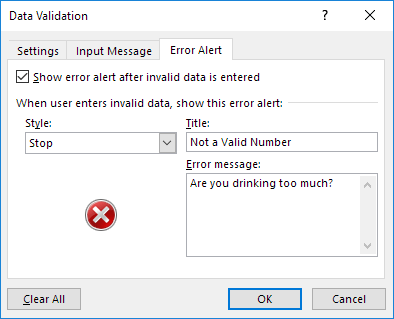
We use datavalidation to control what goes into our Excel cells, making data entry accurate and consistent. It’s found under the Data tab, and we’ll explore its tabs -Settings, Input Message, and Error Alert-to see how it works.
Data validation can help control what a user can enter into a cell. You can use data validation to make sure a value is a number, a date, or to present a dropdown menu with predefined choices to a user. This guide provides an overview of the data validation feature, with many examples.
 Use data validation in Excel to make sure that users enter certain values into a cell.